All FindsShiftListing
 Project
Sold
facebook1991 Mazda Mx-5 Miata
Added March 4, 2026
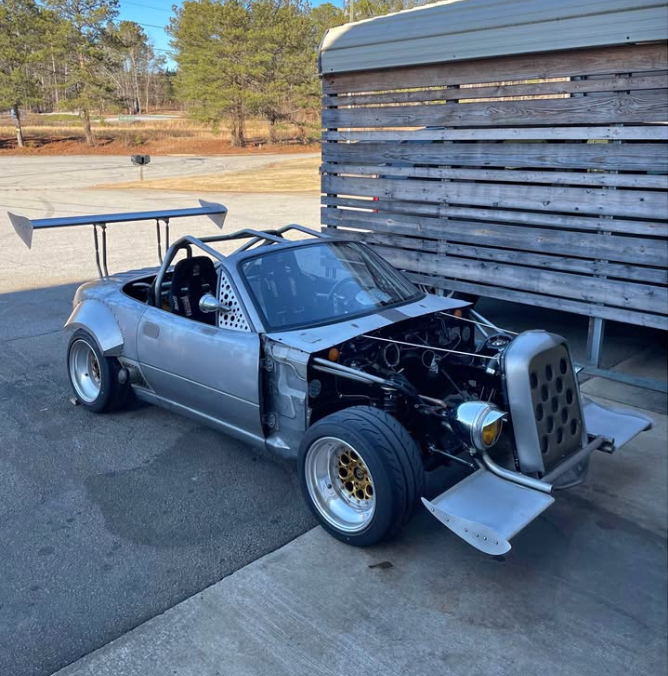
An NA Miata like you've never seen before
This 1991 Mazda Miata has been in deliberate, obsessive development since 2010—featured on Top Gear's 'American Tuned' series, splashed across the pages of Super Street, and built from a bare shell into something that defies easy categorization. It arrives engineless, controversial, and completely fascinating.
The NA Miata needs little introduction. Launched in 1989, it reset expectations for what an affordable two-seat roadster could be, drawing a direct line back to the British sports cars of the 1960s while packaging them with Japanese reliability. The platform's lightweight construction and near-perfect weight distribution made it a natural canvas for builders who wanted more than Mazda's modest four-cylinder could provide—and over three decades, an entire cottage industry of V8 conversion specialists, suspension fabricators, and chassis builders has grown up around it. This car is perhaps the most extreme expression of that tradition.
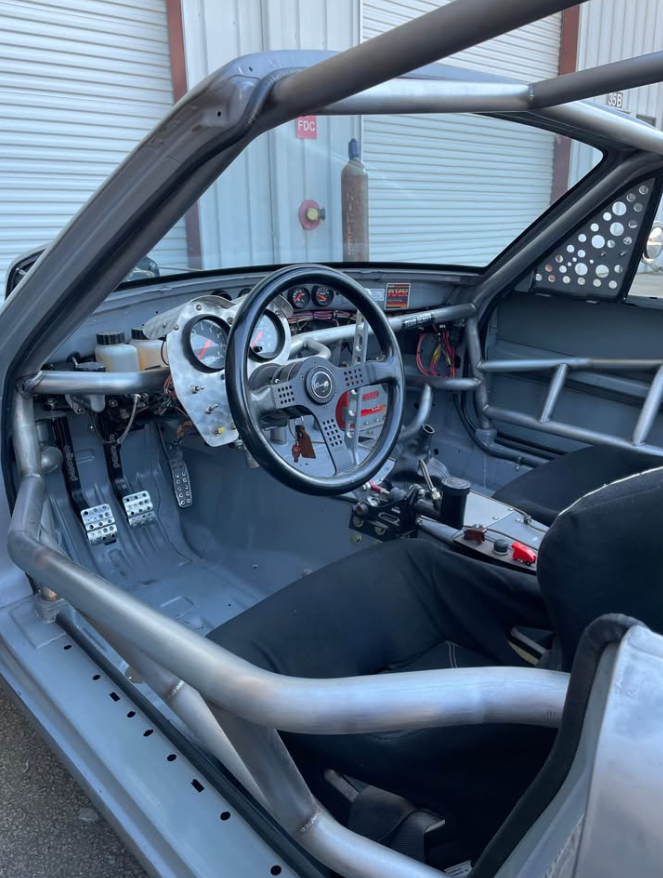
What's sitting in Georgia right now is less a Miata and more a purpose-built chassis that once was a Miata. Built from a completely bare shell, top and bottom, with a fully TIG-welded cage, this car has been configured around a small-block Ford and Tremec TKX drivetrain—though both the engine and transmission have since been pulled and sold, leaving a roller ready for its next powertrain. The suspension package is serious: BC coilovers, V8Roadsters tubular front and rear control arms, Danny George rear two-inch drop spindles, and the V8Roadsters front subframe that makes the swap geometry work. Braking is handled by a Flyin' Miata Wilwood six-piston front big brake kit with an unusual twin four-piston Wilwood setup on each rear corner. The Ford 7.5-inch clutch-type LSD with a 3.27 ratio sits out back. Weld Magnum Import Drag 15x10-13 wheels wrapped in Falken Azenis RT660 245/40-15 tires suggest where the priorities lie. An ASD hydraulic handbrake and Wilwood reverse swing pedal box complete the driver's environment, which is occupied by Sparco Sprint V seats on Garagestar rails and G-Force four-point harnesses. The exterior carries a wildly modified Model A front cowl and Indy car/Can-Am style aero elements—this is not a subtle build.
The practical considerations here are real and worth confronting honestly. The engine and transmission are gone, which means your $10,000 buys a highly specialized, heavily modified rolling chassis with an extensive modification history and no clear sense of how those modifications were maintained or documented over fifteen-plus years. The seller notes it's headed for a full part-out if it doesn't move as a roller, which is both a warning and a negotiating reality. The build's media history—Top Gear, Super Street—adds provenance but not necessarily mechanical confidence. A prospective buyer needs to approach this as a significant ongoing project, not a turnkey acquisition, and should budget accordingly for the drivetrain swap, any cage certification requirements depending on intended use, and a thorough inspection of every fabricated component.
At $10,000 for an engineless roller in Georgia, this is priced for someone who understands exactly what they're taking on—and for the right builder, that's actually not unreasonable. The fabrication work, suspension components, brake hardware, and seat time this chassis has accumulated represent real money. If you've been planning Miata build and want to skip the cage fabrication and front subframe work, someone else has already done the hard part. The question is whether you trust their execution enough to build on it.
Spotted something good?
Submit a Find
If you've found a car worth featuring, send us a link. We review every submission.